
Search New Jersey Police Records
New Jersey police records are kept by local law enforcement agencies, county prosecutors, and the New Jersey State Police. These records include arrest reports, incident logs, crime data, and case files from all 21 counties. You can search for police records in New Jersey through online portals, OPRA requests, or by visiting the right office in person. The state gives the public broad access to many types of police records. This guide walks you through every step of finding and requesting the records you need across New Jersey.
New Jersey Police Records Quick Facts
How to Request Police Records in New Jersey
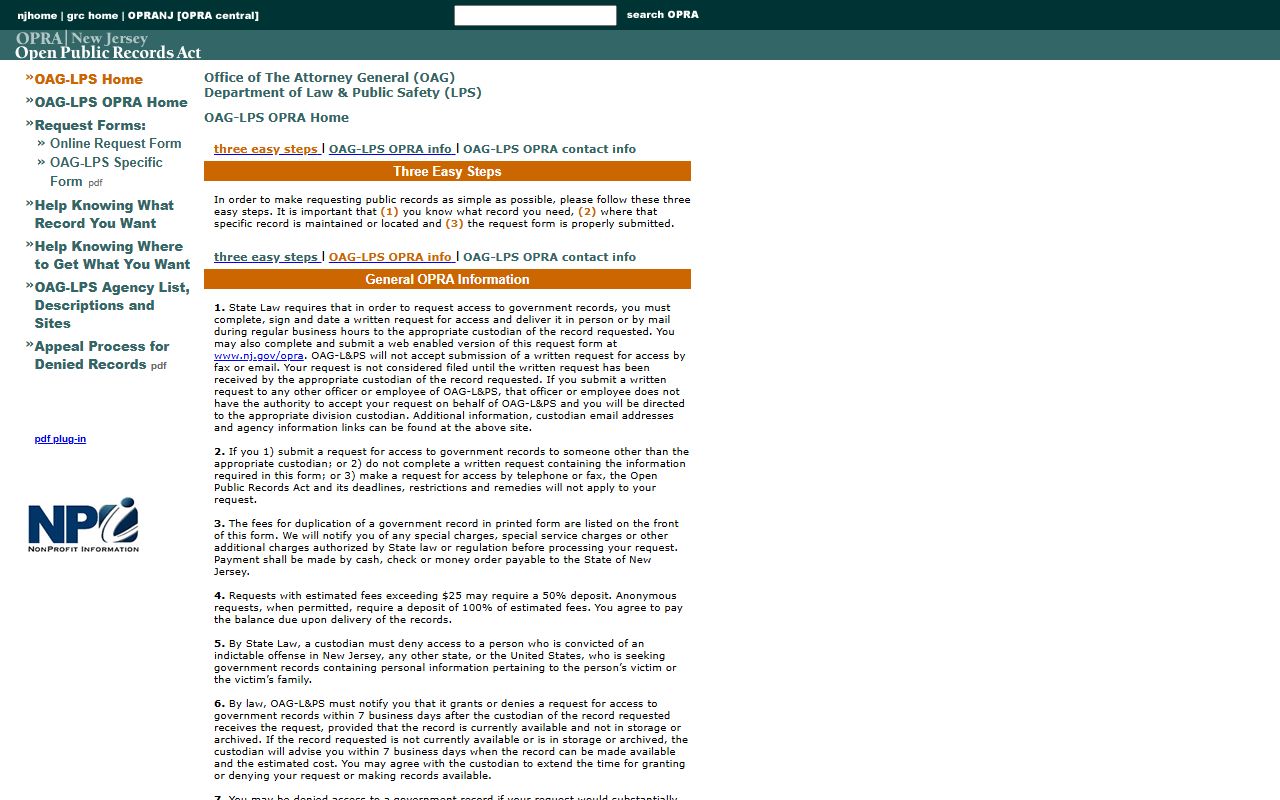
The Open Public Records Act governs access to police records in New Jersey. OPRA is the state law that gives you the right to request government records, including many types of police files. To start a request, you must fill out a written form and send it to the custodian of records at the agency that holds the file. You can submit your form in person, by mail, or through the state's online portal at nj.gov/lps/opra. The custodian must respond within seven business days. If the record is in storage, they will tell you when it can be ready. Fees for copies are set by state law. Requests with costs over $25 may need a 50% deposit up front.
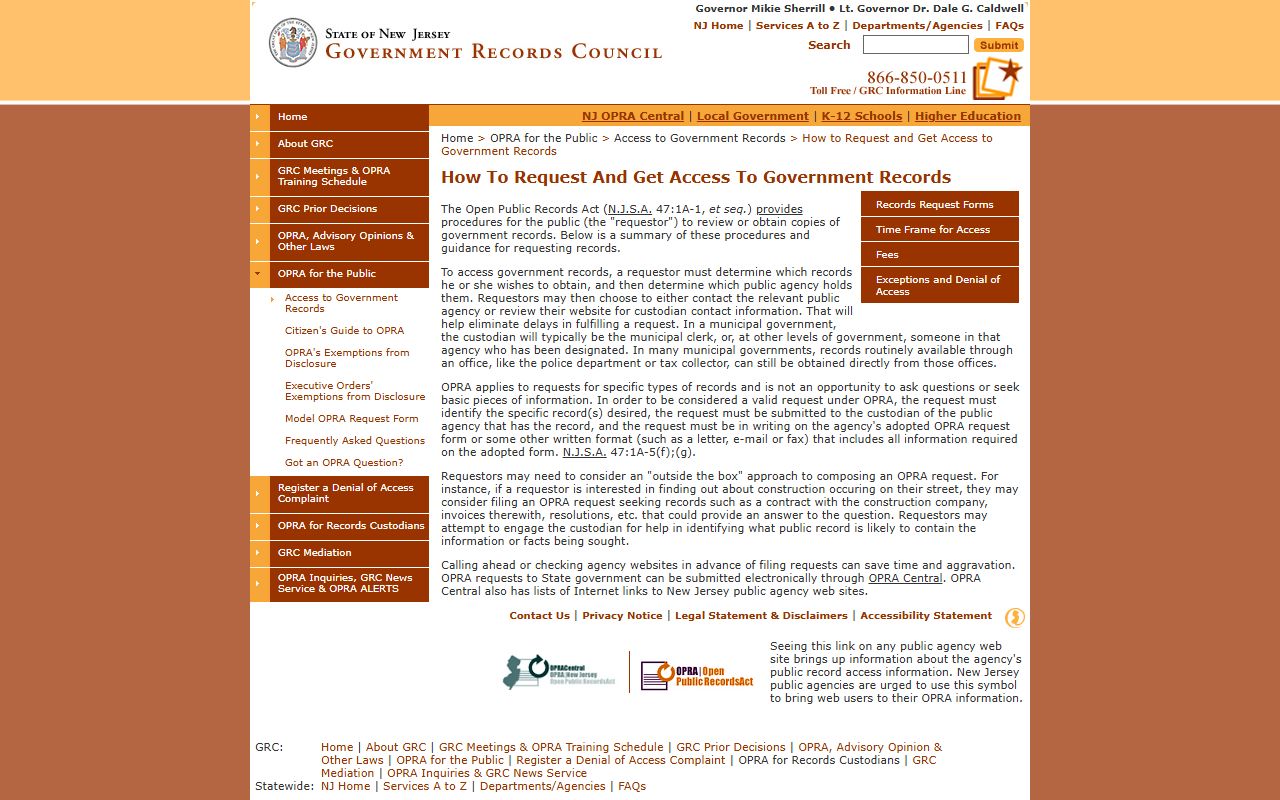
Every public agency in New Jersey must use the official OPRA request form from the Government Records Council. Your request must name the specific records you want. OPRA does not let you ask broad questions or seek general facts. You need to ask for a named document, such as an arrest report, incident log, or case file. The more detail you give, the faster the agency can find what you need. If the agency denies your request, you have the right to challenge the decision.
You can appeal a denial in two ways. File a complaint with the Government Records Council or take the matter to Superior Court. The GRC toll-free line is 866-850-0511. They handle disputes at no cost to you. If a custodian is found to have knowingly denied access, the agency faces fines of $1,000 for a first offense, $2,500 for a second, and $5,000 for a third under N.J.S.A. 47:1A-11.
New Jersey Police Records You Can Access
Not all police records are open to the public. New Jersey law draws a line between records that must be shared and those that are kept private. Specific arrest data is public and must be released within 24 hours of a request under N.J.S.A. 47:1A-3. This includes the date, time, and place of arrest. It also covers the type of crime, the name and age of the person arrested, and the identity of the arresting officer. Bail details are public too.
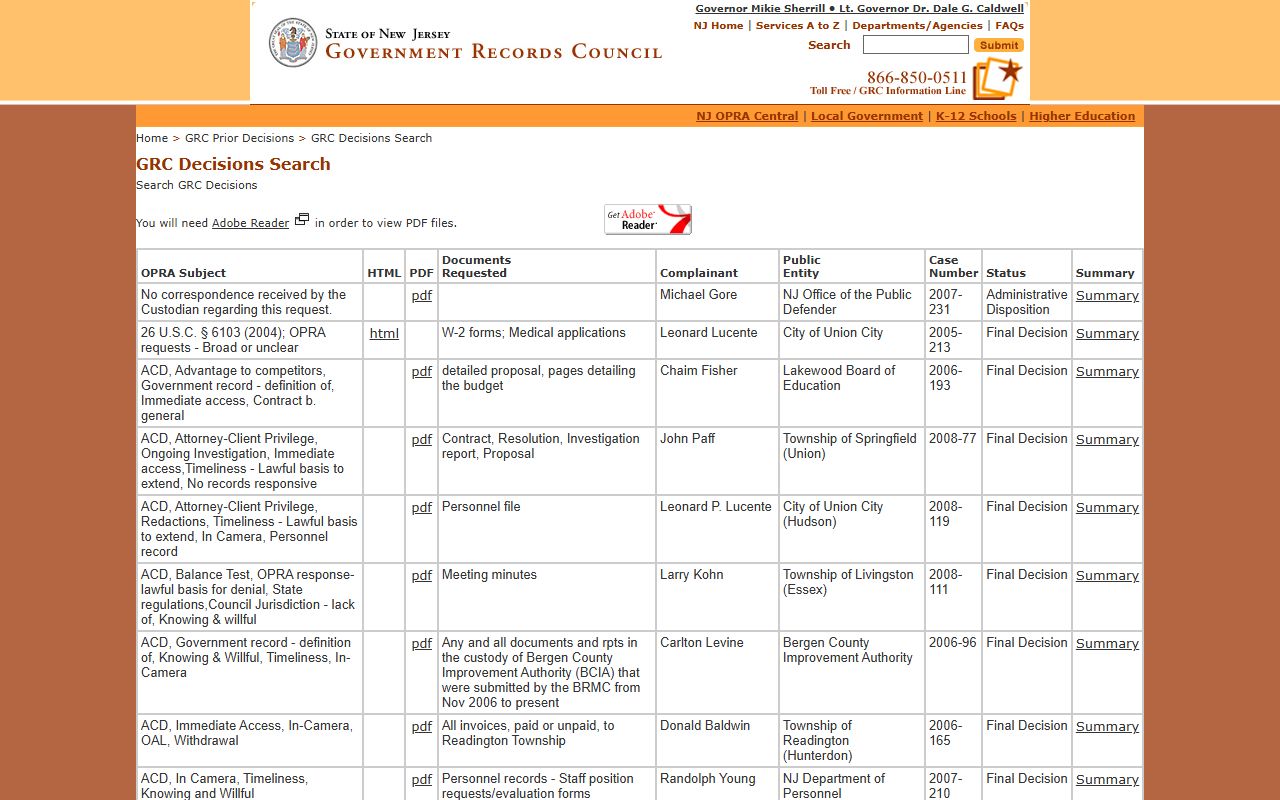
Criminal investigatory records have different rules. Under N.J.S.A. 47:1A-1.1, a record is exempt if it was not required by law to be made and it relates to a criminal investigation. This means some police reports, photos, and case notes may be withheld. The GRC Decisions Database has many rulings on what counts as a criminal investigatory record. For instance, the GRC found in Nance v. Scotch Plains that police reports can be exempt when they meet the two-prong test. But not all police records fall under this rule.
Executive Order No. 69 blocks the release of fingerprint cards, photographs, and similar criminal investigation records. The Office of the Attorney General issues directives that shape how agencies handle records. Directive 2018-1, for example, provides rules on public access to dash camera and body camera footage of police-involved shootings in New Jersey.
Police Records and Crime Data in New Jersey
The New Jersey State Police run the Uniform Crime Reporting program. All law enforcement agencies in the state submit crime data to this program. The UCR Unit collects and compiles stats from over 480 police departments. They publish the annual Crime in New Jersey report, the Domestic Violence Report, the Bias Incident Report, and the Carjacking Offense Report. These reports give a clear view of crime trends across every county.
The UCR Analytical Unit also sends data to the FBI's national program. New Jersey has moved to the National Incident Based Reporting System, or NIBRS. This newer system captures more detail about each crime. The state began its switch in 2019. NIBRS data helps spot patterns and trends in police records across New Jersey.
Gun crime stats are tracked through the NJGUNStat program. This open data portal gives the public access to monthly and quarterly gun crime numbers. Domestic violence data is reported under N.J.S.A. 2C:25-24. Every agency must submit domestic violence reports to the UCR program. The 2023 data is sorted by county and covers all municipal departments and the State Police.
Criminal History Checks in New Jersey
The State Police Identification and Information Technology Section handles criminal history record checks. To get a full check, you must fill out a request form, provide fingerprints through an approved vendor, and pay the $42.80 fee. Processing takes about two to four weeks. The State Police will only have a record if the person was fingerprinted at the time of arrest.
If a person was not fingerprinted, the arrest record stays with the local police department and the court. It will not appear in the State Police database. For questions about criminal history checks, call the Criminal Information Unit at 609-882-2000 ext. 2918. Mail your completed form to P.O. Box 7068, West Trenton, NJ 08628.
Court Records and Police Cases in New Jersey
The New Jersey Courts provide public access to criminal case information. You can search by county, case type, defendant name, or case number. The portal shows case status and may include custody details and facility location. Court records link directly to police records because arrests lead to case filings. The Criminal Division Records Office at each Superior Court handles requests for case files.
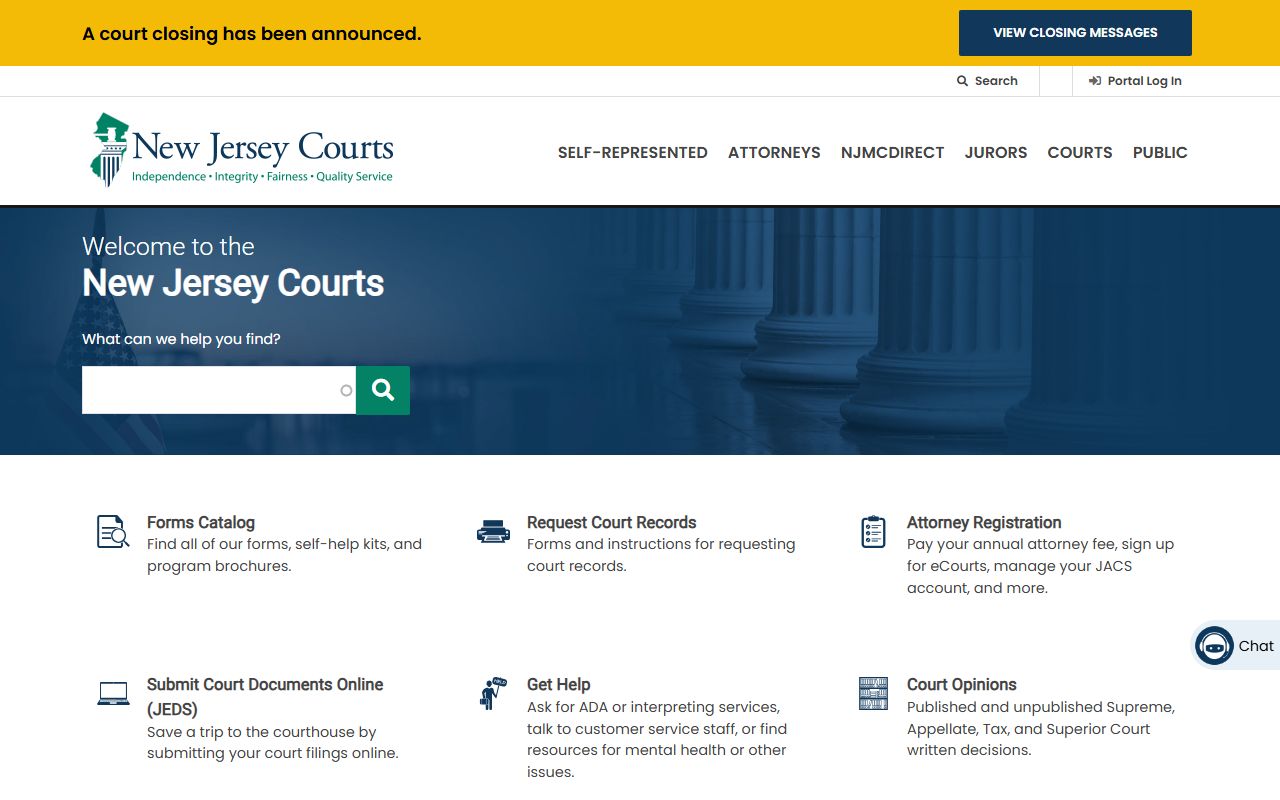
To get court records tied to police cases in New Jersey, you can complete a Records Request Form at the courthouse. Bring the defendant's full name and case docket number if you have it. You will need a valid photo ID. The first five pages cost $5.00, and each page after that is $1.00. Certified copies run an extra $10.00 per document.
Note: Court records and police records are stored by different agencies in New Jersey, so you may need to make requests to both.
How Long Agencies Keep Police Records
The New Jersey Division of Archives and Records Management sets rules for how long police records must be kept. Many criminal investigation files have a five-year retention schedule. Homicide records must be kept until the defendant's sentence expires, per Attorney General Administrative Directive No. 2010-1. Agencies must preserve all records in their care. If an OPRA request or lawsuit is pending, a Litigation Hold Order must be issued and all related records must be set aside.
Records custodians must file a Records Disposal Request before destroying old files. No record can be destroyed without proper approval. As long as a record is in the agency's hands, it is open to discovery. This matters for police records in New Jersey because even old files may be available if they have not been lawfully disposed of.
Key Rulings on New Jersey Police Records
The GRC Decisions Database holds hundreds of rulings on police records access. These cases shape what you can and cannot get. In North Jersey Media Group v. Township of Lyndhurst, the Supreme Court allowed access to Use of Force Reports. The Court held that an Attorney General policy requiring such reports had the force of law. This was a landmark win for public access to police records in New Jersey.
In Rivera v. Union County Prosecutor's Office (2022), the Supreme Court ruled that Internal Affairs reports can be accessed under the common law right of access. The Court set five factors for judges to weigh: the nature and seriousness of misconduct, whether it was confirmed, the discipline given, the officer's role, and the officer's record. This ruling opened new paths for getting police records in New Jersey that were once sealed.
Other notable cases address specific types of police records. In Paff v. Ocean County Prosecutor's Office, the Supreme Court held that mobile video recordings are criminal investigatory records. In Melton v. City of Camden, arrest photographs were found exempt under Executive Order 69. Each ruling adds detail to what the public can request from police agencies in New Jersey.
Inmate and Offender Searches in New Jersey
The New Jersey Department of Corrections runs an Offender Information database. You can search for inmates in state custody by last name. The system shows the inmate's status, facility, and offense details. This is a free tool for the public. You can also contact the Bias Hotline at 1-800-277-BIAS (2427) to report suspected bias incidents to the State Police.
County jails keep their own inmate records. Contact the county sheriff or corrections department for local lookups. Some counties have online inmate search tools. Others require a phone call or in-person visit. Police records tied to inmates can also be requested through OPRA at the county level in New Jersey.
Browse New Jersey Police Records by County
Each county in New Jersey has its own prosecutor's office, sheriff, and municipal police departments that keep police records. Pick a county below to find local contact info and resources for police records in that area.
Police Records in Major New Jersey Cities
Residents of major cities can request police records from their local police department or the county prosecutor. Pick a city below to learn about police records in that area.