
Newark Police Records Access
Newark is the largest city in New Jersey and the seat of Essex County. The Newark Police Division is the biggest municipal law enforcement agency in the state. Newark police records include incident reports, arrest logs, accident reports, and other documents held by the department. The city sits in the northern part of the state with close ties to New York City. Residents and the public can request police records through the Newark City Clerk or the Police Division Records Bureau under the Open Public Records Act.
Newark Police Records Requests
The Open Public Records Act, known as OPRA and set out in N.J.S.A. 47:1A-1, gives the public a right to access government records in New Jersey. Newark police records fall under this law. You can file a request with the Newark City Clerk or go through the Police Division Records Bureau. Both paths lead to the same pool of records. The clerk acts as the main custodian for OPRA in the city.
To start, you fill out an OPRA request form. Be clear about what you want. Name the type of record. Give dates. Give case numbers if you have them. A vague request will slow things down. The city has seven business days to respond under the law. They can grant your request, deny it, or ask for more time. If they need more time, they must tell you why and give a new date.
The Newark city portal has details on where to send your form. You can hand it in at city hall, mail it, fax it, or send it by email. The Newark Department of Public Safety oversees the police, fire, and emergency services. Police records from any of these branches go through the same process. Keep a copy of your form for your own files.
Note: Newark must respond to OPRA requests within seven business days or provide a written reason for delay.
Types of Newark Police Records
Newark police records cover a wide range of documents. Each type serves a different purpose. The most common requests involve incident reports, arrest records, and accident reports. Other records exist too. Internal affairs files, use-of-force logs, and daily blotter entries are all part of what the Newark Police Division keeps on file.
Incident reports document calls for service. When someone calls the police in Newark, an officer writes up what happened. The report has the date, time, location, names of people involved, and a short summary. These are public records in most cases. Some details may be redacted if they fall under an exception in the law, such as ongoing investigations under N.J.S.A. 47:1A-3.
Arrest records show who was taken into custody. They list the charge, the date, and the person's name. Newark arrest records are held at the Police Division and also show up in court filings once a case moves forward. The Essex County Prosecutor handles felony cases that start with a Newark arrest. Traffic accident reports are another big category. If you were in a crash in Newark, you can get the report from the Records Bureau. Insurance companies often need these.
The city portal shows where to find Newark police records online.
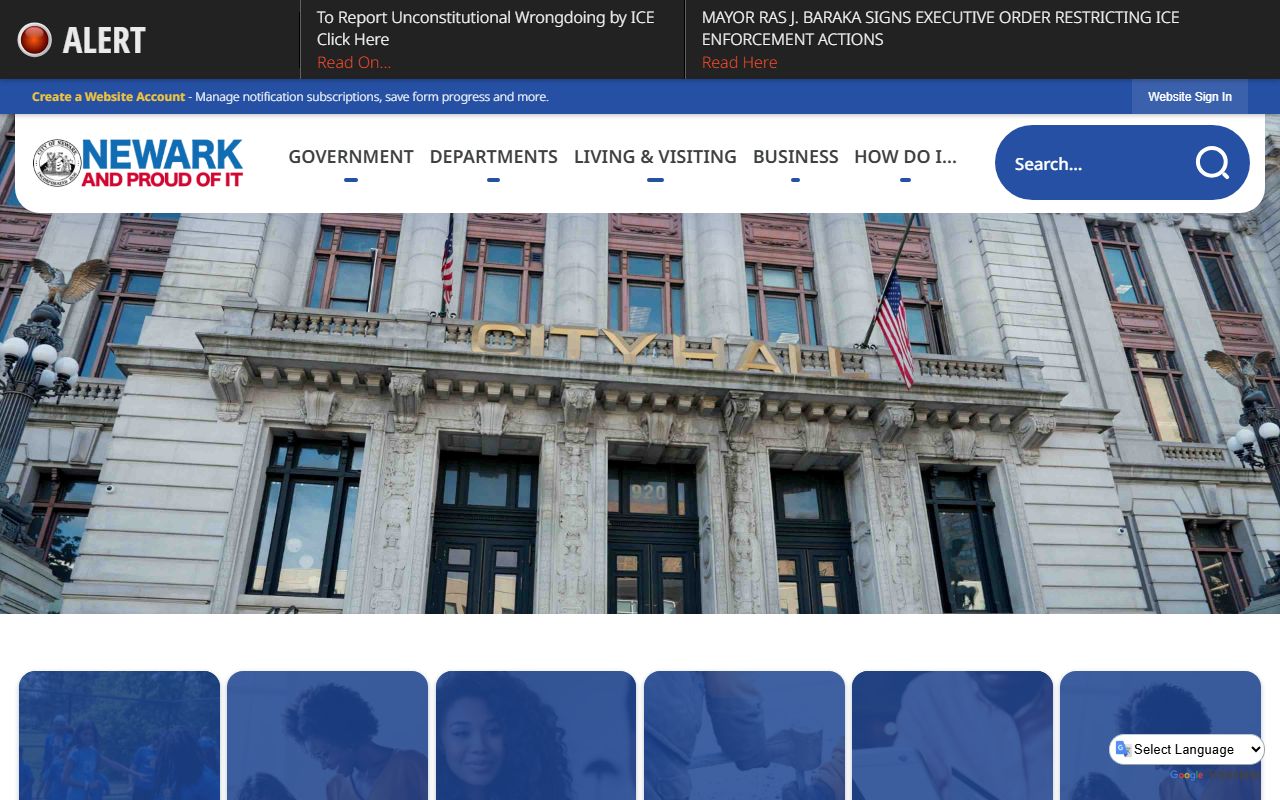
The portal lists city departments and provides links to forms and contact details for the Newark Police Division.
Newark Court Records and Cases
Newark Municipal Court handles cases that start with police action in the city. These include disorderly persons offenses, traffic violations, and preliminary hearings for more serious charges. The court is separate from the police, but the records overlap. An arrest by Newark police leads to a court case. The court keeps its own set of records for each matter.
For more serious crimes, the Essex County Prosecutor takes over. Indictable offenses go to the Essex County Superior Court. Records from these cases are held at the county level. You can search for them through the New Jersey Courts website. The state court system has an online portal where you can look up case information by name or docket number.
The New Jersey Courts portal is a key tool for finding Newark court records tied to police activity.

This portal covers all courts in the state, including those that handle Newark cases at both the municipal and county levels.
Note: Municipal court records and superior court records are kept in different systems in New Jersey.
Newark Crime Data
Crime data is different from individual police records. It shows trends. Newark reports crime statistics to the state each year as part of the Uniform Crime Reporting program. The New Jersey State Police publishes these numbers. You can see how many robberies, assaults, thefts, and other crimes were reported in Newark over a given year.
This data helps residents understand safety trends in the city. It also helps researchers and journalists. The reports break down crimes by type and sometimes by area. Newark, as the largest city in the state, generates a large share of the data. The numbers are public. Anyone can view them on the State Police website at no cost.
The state also tracks use-of-force incidents. Newark police officers must file a report each time they use force. These reports are collected at the state level and made available in summary form. Individual use-of-force reports can be requested through OPRA, though some details may be withheld if an investigation is still open.
Police Record Exemptions in Newark
Not all Newark police records are open to the public. OPRA has built-in exemptions. Records tied to active criminal investigations are often withheld under N.J.S.A. 47:1A-3. Victim information may be kept private. Juvenile records are sealed. Internal affairs investigations have their own rules. The law tries to balance public access with privacy and safety.
If your request is denied, the city must tell you why. They must cite a specific exemption in the law. You have the right to appeal. Appeals go to the Government Records Council, which is the state body that resolves disputes over public records. You can also file a complaint in Superior Court. The GRC process is free. Court action may involve legal costs.
Expunged records pose a special question. Once a court orders an expungement, the arrest and case records are supposed to be removed from public view. However, New Jersey case law has shown that some records, such as internal affairs files, may still be accessible under the common law right of access even after an expungement. This is a complex area of law that affects how Newark police records are handled in certain situations.
Appeals for Newark Records Denials
The Government Records Council handles complaints when a public agency denies an OPRA request. If Newark denies your request for police records, you can file a complaint with the GRC. The process is straightforward. You fill out a form on the GRC website and explain what happened. The GRC will review both sides and issue a decision.
You can also search past GRC decisions to see how similar cases were resolved. The GRC decision search tool lets you look up rulings by keyword. This is helpful if you want to know whether a certain type of Newark police record has been found to be public or exempt in a prior case. Past decisions do not bind future ones, but they give a sense of how the council views different record types.
The other option is Superior Court. You can file a lawsuit under OPRA to compel the release of Newark police records. This path is faster in some cases but costs more. If you win, the court can order the city to pay your legal fees. If you lose, you bear your own costs. Many people start with the GRC because it is free and does not require a lawyer.
Note: GRC complaints must be filed within 45 days of the denial of your OPRA request.
State Resources for Police Records
New Jersey offers several state-level tools for finding police records. These complement what you can get from Newark directly. The Office of the Attorney General oversees law enforcement across the state. It publishes data on police use of force, officer misconduct, and other matters. The Attorney General also sets policy that affects how Newark and other cities handle records.
The state OPRA portal provides a model request form that works for any public agency in New Jersey, including Newark. You can download it from the GRC model request form page. Using the official form is not required, but it helps make sure your request has all the information the city needs. It also creates a clear paper trail.
The OPRA main page is a good starting point for understanding the law that governs Newark police records.
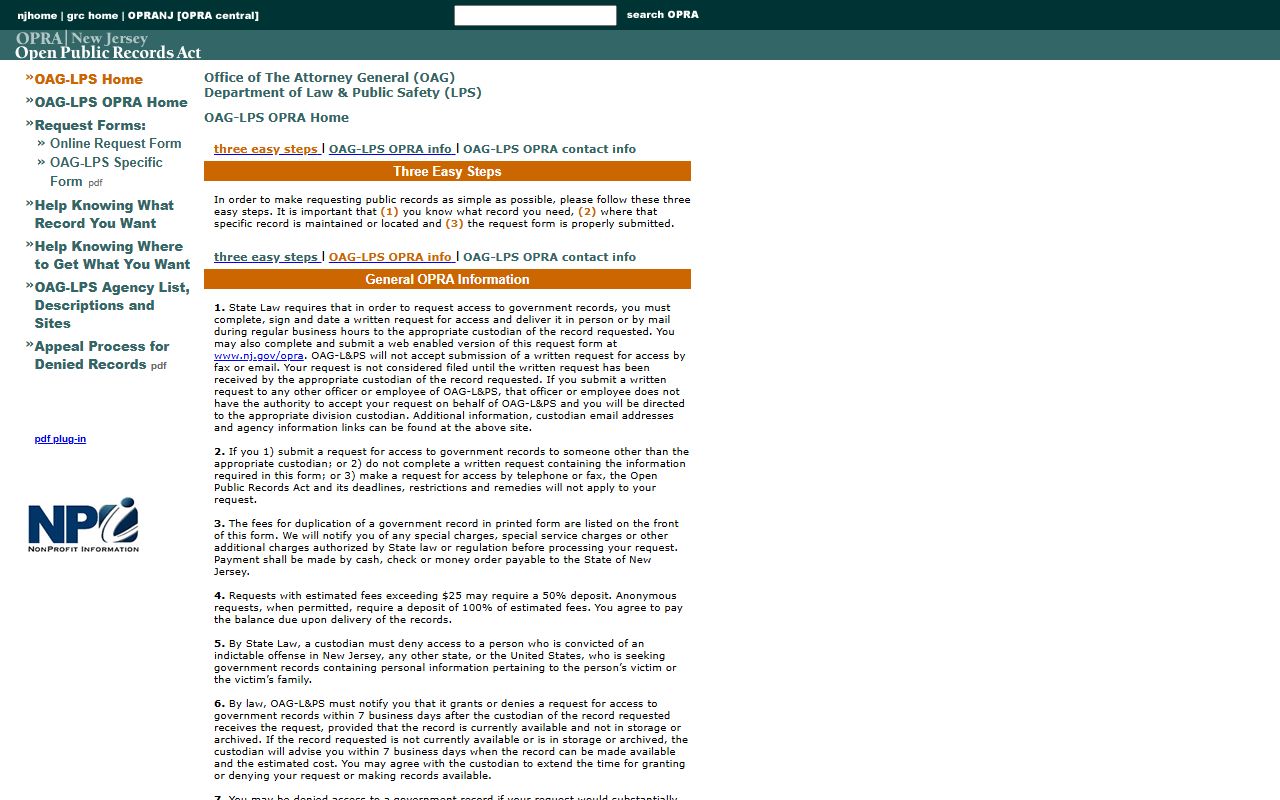
This page explains the full scope of public records law in New Jersey and links to all related resources.
How to Get Newark Police Records
Getting Newark police records takes a few steps. First, decide what you need. An incident report? An arrest record? A crash report? Each has a slightly different path. For most records, start with an OPRA request to the Newark City Clerk.
Here is what to include in your request:
- Your full name and contact information
- The type of record you want
- The date or date range of the incident
- Names of people involved, if known
- The case or report number, if you have it
Submit the form and wait for a response. Newark has seven business days. If the records exist and are not exempt, the city will provide them. You may need to pay a copy fee. The law allows the city to charge for the actual cost of making copies. Electronic copies are often cheaper than paper. Ask for electronic delivery if you can.
For accident reports, you can also go to the Newark Police Division Records Bureau in person. Bring your ID and the details of the crash. The staff can pull the report while you wait in many cases. For court records tied to Newark police cases, use the state courts portal or visit the Essex County courthouse.
Essex County Police Records
Newark is the county seat of Essex County. The Essex County Prosecutor handles serious criminal cases that originate with Newark police. County-level records include grand jury indictments, prosecution files, and superior court case documents. For a broader look at police records across all of Essex County, visit the county page.