
Bayonne Police Records
Bayonne police records are held by the Bayonne Police Department in Hudson County, New Jersey. Bayonne sits on a long strip of land that juts south into New York Bay. The city has about 71,000 residents and is one of the more dense towns in the state. Police records from Bayonne cover a wide range of calls, from minor disputes to more serious crimes. Residents and members of the public can request these police records through formal channels set up by New Jersey law. The city has its own police force that handles all local calls and keeps detailed logs of each event.
Bayonne Police Record Requests
You get Bayonne police records through an OPRA request. OPRA stands for the Open Public Records Act. It is the main law in New Jersey that lets you ask for government files. You send a written request to the city clerk or records custodian. The city must respond within seven business days.
To start, go to the City of Bayonne website. You can find forms and contact details there. The clerk's office takes requests by mail, fax, email, or in person. You must be clear about what you want. Name the type of record. Give dates if you can. The more detail you provide, the faster the search goes.
The Bayonne city portal is where many residents start their search for police records and other public files.

The site lists departments, forms, and contact numbers for making requests for Bayonne police records.
Not all police records are open to the public. Some files are kept private. Records tied to an open case may be held back. Internal affairs files have their own rules. But basic items like arrest logs, incident reports for closed cases, and call logs are often available. If a record is denied, the city must tell you why in writing.
Note: The city has seven business days to respond to your OPRA request, but they can ask for more time if the request is large.
Bayonne Crime Reports
Crime data for Bayonne comes from the Uniform Crime Reporting program run by the New Jersey State Police. Each year, police departments across the state send their numbers to the state. The state then puts them together in a report. You can see how Bayonne compares to other towns in Hudson County and across New Jersey.
These reports show totals for crimes like theft, assault, burglary, and auto theft. They do not name suspects or victims. The data is useful if you want a broad view of crime trends in Bayonne over time. You can look at year-to-year changes and see if certain crimes are going up or down.
The New Jersey State Police publishes annual crime data that includes Bayonne statistics.

This state resource lets you look at Bayonne crime numbers alongside data from all other towns in New Jersey.
The reports are free to view on the New Jersey State Police UCR page. They go back many years. Some are in PDF form. Others are in spreadsheets. You can download them and review the data at your own pace. This is one of the best ways to get a big picture view of crime in Bayonne without filing a formal request.
Hudson County Prosecutor Records
Some cases in Bayonne are handled by the Hudson County Prosecutor's Office. This is true for serious crimes. When a case goes to the county level, records may shift from the city to the county. You might need to make a separate request to the prosecutor's office for those files.
The Hudson County Prosecutor's Office has its own records custodian. You file an OPRA request with them just like you would with the city. The rules are the same. Seven business days. Written request. Clear details about what you need.
Major crimes in Bayonne often involve both the local police and the county prosecutor. In those cases, the city may have early reports while the county holds later files. If you want the full picture, you may need to request from both. Each office will only give you what they hold.
Grand jury records are sealed. You cannot get those through OPRA. But indictments and court filings are usually available through the New Jersey Courts system once a case moves to court. The courts have their own search tools that cover Hudson County cases from Bayonne.
Filing an OPRA Request in Bayonne
Start with the right form. The state provides a model OPRA request form that works for any town. You can also use the form on the City of Bayonne website. Fill in your name, address, and what you want. Be as specific as you can. Ask for police records by type, date range, or case number if you have one.
The state Government Records Council provides a model form you can use for Bayonne police record requests.
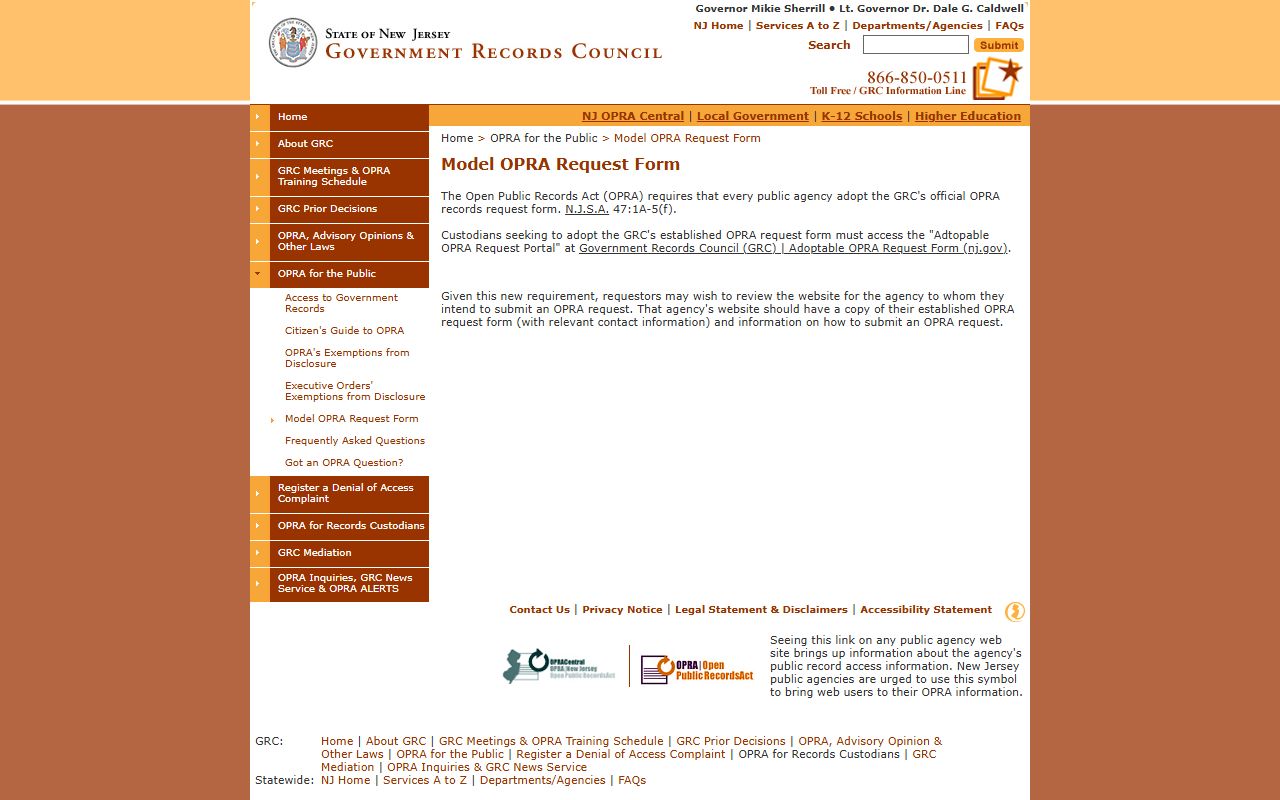
This form works for any New Jersey municipality, including Bayonne.
Send it to the records custodian. In Bayonne, that is the city clerk's office. You can drop it off at City Hall. You can mail it. Some towns accept email. Check with the clerk to see what they prefer. Keep a copy of your request for your own files.
Once you submit, the clock starts. The city has seven business days. They may fill your request right away. They may ask for more time. They may deny it. If they deny it, they must say why. You then have the right to appeal. Appeals go to the Government Records Council or to Superior Court.
Note: You do not need to say why you want the records. The law does not require a reason.
Types of Bayonne Police Records
Bayonne police keep many types of records. Not all are public. But many are. Here is a look at the main categories.
Arrest logs are public. They show who was arrested, when, and for what charge. These are basic facts. The police must make them available. They are not kept secret unless a rare exception applies.
Incident reports cover calls for service. A fight at a store. A car crash. A noise complaint. The officer writes up what happened. These reports may be public once the case is closed. If the case is still open, the report may be held back as part of a criminal investigation.
Call logs show every call to the police. They list the time, the type of call, and the location. They do not have full details. But they give a good sense of what the police responded to on a given day or week in Bayonne.
- Arrest logs and booking records
- Incident and accident reports
- Daily call logs and dispatch records
- Use of force reports (when not exempt)
- Internal affairs summaries (limited access)
Internal affairs records in Bayonne follow special rules. New Jersey law changed in recent years to allow more access to some of these files. Final disciplinary actions are now public in many cases. But investigation details may still be off limits. The rules are complex. If you want internal affairs records, be ready for a possible denial and know your appeal rights.
Bayonne Court and Case Records
When a Bayonne arrest leads to charges, the case moves to court. Minor offenses go to Bayonne Municipal Court. Serious crimes go to Hudson County Superior Court. Each court keeps its own records.
Municipal court records include complaints, summonses, and case outcomes. You can ask the municipal court clerk for copies. For Superior Court cases, the New Jersey Courts website has an online search tool. You can look up cases by name or case number.
The New Jersey Courts portal lets you search for case records across all counties, including Hudson County cases from Bayonne.
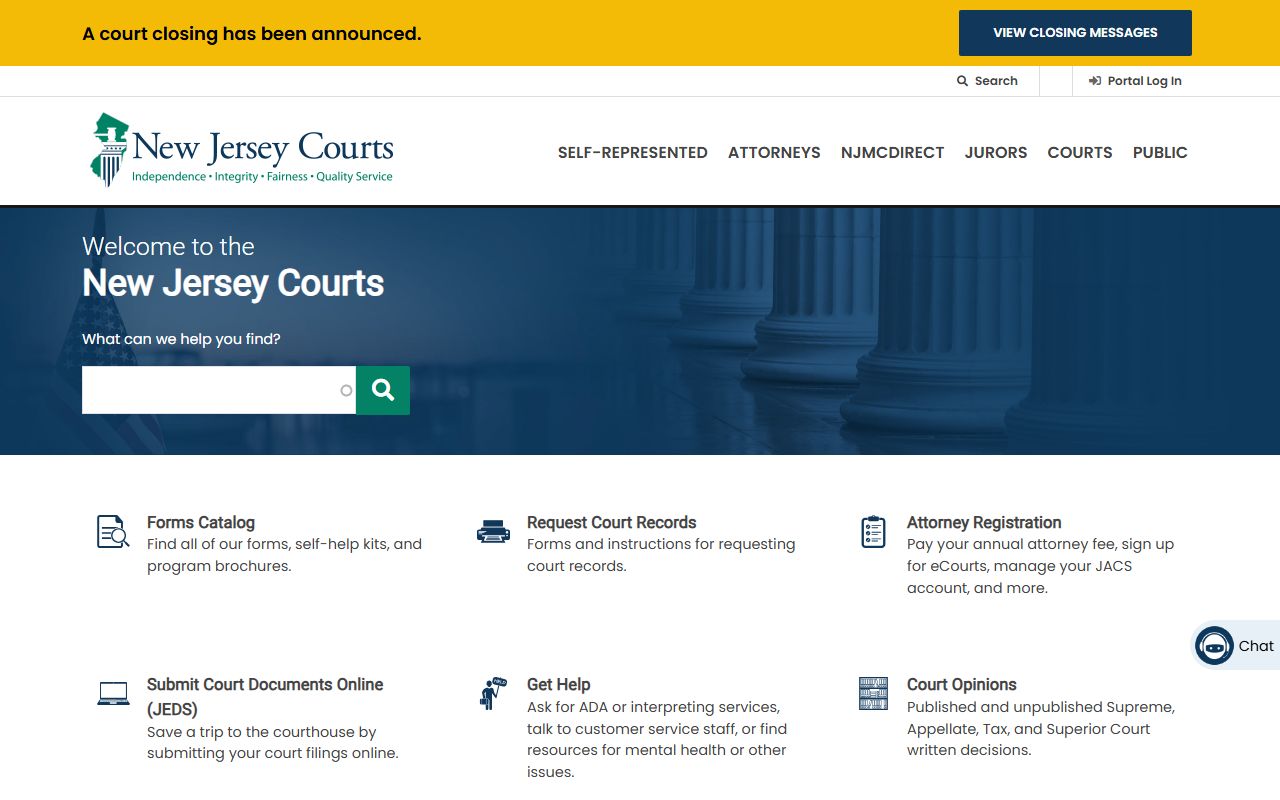
Use this tool to find criminal case records that started with a Bayonne police arrest.
Court records and police records are different. Police records come from the department. Court records come from the court. A full picture of a case may need records from both. If you want everything related to an arrest in Bayonne, check both sources.
Appeals for Denied Bayonne Records
If the City of Bayonne denies your request, you have options. The denial must be in writing. It must cite a legal reason. If you think the denial is wrong, you can challenge it.
One path is the Government Records Council. This is a state body that hears OPRA complaints. You file a complaint form. It is free. The GRC reviews the case and issues a decision. This can take time. Months, sometimes. But it does not cost you anything to file.
The other path is Superior Court. You can file a lawsuit. This is faster in some cases. But it costs money. You may need a lawyer. If you win, the court can order the city to pay your legal fees. If you lose, you pay your own costs.
Most people start with the GRC. It is simple and free. You can search past GRC decisions on the GRC decision search page to see how similar cases turned out. This can help you decide if your appeal has a good chance of success before you file.
Note: You must file your GRC complaint within 45 days of the denial from Bayonne.
Hudson County Police Records
Bayonne is in Hudson County. The county has its own police records, court system, and prosecutor's office. Many serious cases from Bayonne end up at the county level. For more about county-wide records, resources, and how to make requests, visit the Hudson County police records page.